
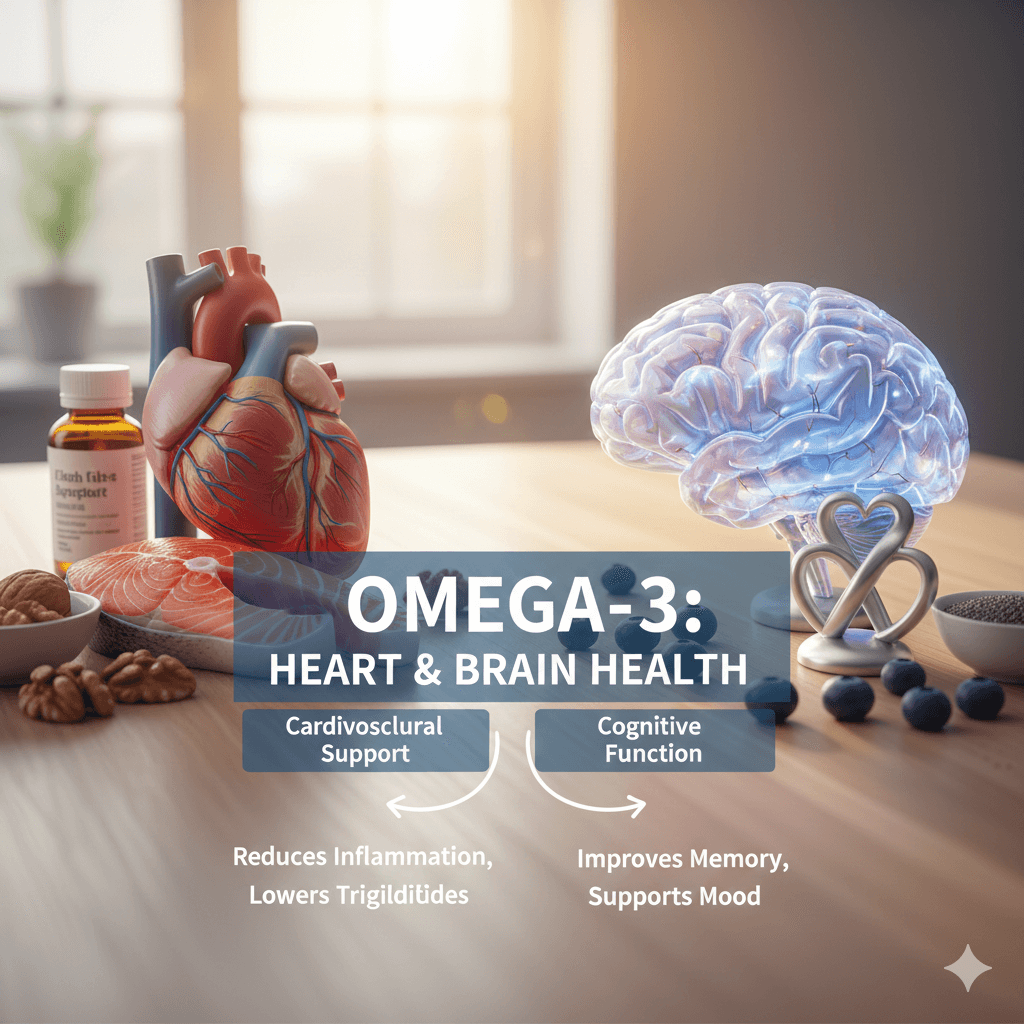
Understanding omega-3 fatty acids
Omega-3 fatty acids are a family of polyunsaturated fats that the body cannot produce on its own, making them essential nutrients that must come from food or supplementation. The three primary types are ALA (alpha-linolenic acid), found in plant sources like flaxseeds and walnuts; EPA (eicosapentaenoic acid), found predominantly in fatty fish; and DHA (docosahexaenoic acid), also concentrated in marine sources and critical for brain structure.
While ALA serves as a precursor, the body converts it to EPA and DHA at a very low rate, typically less than five percent. This is why direct dietary sources of EPA and DHA, or high-quality supplements, are considered the most reliable way to maintain adequate levels. Research published in the Journal of the American Heart Association consistently highlights that populations with higher omega-3 intake experience lower rates of cardiovascular events and cognitive decline.
- ALA is found in flaxseeds, chia seeds, hemp seeds, and walnuts.
- EPA is abundant in salmon, mackerel, sardines, and anchovies.
- DHA is concentrated in fatty fish and algae-based supplements.
- The body converts ALA to EPA and DHA at a rate below five percent.
How omega-3 supports brain function
DHA alone accounts for roughly 40 percent of the polyunsaturated fatty acids in the brain. It is a structural component of neuronal cell membranes, directly influencing how efficiently signals travel between neurons. When DHA levels are adequate, cell membranes remain fluid and flexible, allowing neurotransmitters like serotonin and dopamine to bind to their receptors more effectively.
Studies from the American Journal of Clinical Nutrition suggest that individuals who consume omega-3-rich diets demonstrate better performance on memory tests, faster processing speeds, and improved attention spans compared to those with low intake. Omega-3s also appear to modulate neuroinflammation, a process increasingly linked to mood disorders, age-related cognitive decline, and neurodegenerative conditions.
Beyond daily cognitive performance, omega-3 fatty acids have shown promise in supporting mental health. EPA in particular has been studied for its role in reducing symptoms of mild to moderate depression, with several meta-analyses suggesting that EPA-dominant supplements may complement standard therapeutic approaches when used under clinical guidance.
- DHA is a major structural fat in brain cell membranes.
- Adequate omega-3 intake supports memory, focus, and processing speed.
- EPA may help modulate inflammatory pathways linked to mood imbalances.
- Omega-3s support healthy neurotransmitter signaling across synapses.
- Long-term intake is associated with reduced risk of age-related cognitive decline.
Cardiovascular protection from omega-3
The cardiovascular benefits of omega-3 fatty acids have been recognized since the 1970s, when researchers first observed that populations with high fish consumption, such as the Inuit in Greenland, experienced remarkably low rates of heart disease. Since then, decades of clinical research have confirmed that EPA and DHA contribute to heart health through multiple mechanisms.
Omega-3s help reduce circulating triglyceride levels, a well-established risk factor for atherosclerosis and coronary artery disease. The American Heart Association recognizes that two to four grams of EPA and DHA per day, under medical supervision, can lower triglycerides by 25 to 30 percent in individuals with elevated levels. Beyond triglycerides, omega-3 fatty acids support healthy blood pressure, reduce arterial stiffness, and promote a balanced inflammatory response within blood vessel walls.
These fats also influence heart rhythm stability. Research indicates that omega-3 supplementation may reduce the incidence of certain types of arrhythmias by stabilizing the electrical activity of cardiac cells. While omega-3s are not a replacement for prescribed cardiovascular medications, they represent a well-supported dietary strategy for long-term heart health when combined with regular exercise and a balanced diet.
- EPA and DHA can reduce triglyceride levels by 25 to 30 percent at therapeutic doses.
- Omega-3s support healthy blood pressure and arterial flexibility.
- Regular intake is linked to reduced risk of arrhythmias and cardiac events.
- Anti-inflammatory effects help protect the inner lining of blood vessels.
- Fish consumption two to three times per week is a common clinical recommendation.
"Omega-3 fatty acids are one of the few nutrients where the evidence for both brain and heart benefits is strong, consistent, and supported across multiple decades of research."
Practical ways to increase your omega-3 intake
Building omega-3-rich habits does not require dramatic dietary changes. Small, consistent adjustments to your weekly meal plan can significantly improve your EPA and DHA levels over time. The key is to prioritize whole-food sources first and consider supplementation when dietary intake falls short.
For those who eat fish, aiming for two to three servings per week of fatty fish like wild-caught salmon, sardines, or mackerel provides a strong foundation. Plant-based eaters can focus on ALA-rich foods and consider algae-derived DHA supplements, which offer a direct source of DHA without the need for fish.
- Add ground flaxseeds or chia seeds to morning oatmeal, yogurt, or smoothies.
- Swap conventional cooking oils for cold-pressed flaxseed oil in salad dressings.
- Include a handful of walnuts as a daily snack or salad topper.
- Choose wild-caught salmon or sardines for two to three meals per week.
- If supplementing, look for third-party tested fish oil or algae oil with combined EPA and DHA of at least 500 milligrams per serving.
- Store fish oil supplements in the refrigerator to preserve freshness and reduce aftertaste.
Wellness cue
Consistency matters more than quantity. A modest daily intake of omega-3s through food and supplementation yields far better long-term results than occasional large doses. Pair omega-3 intake with meals containing healthy fats for improved absorption.
Who should pay special attention to omega-3 levels
While everyone benefits from adequate omega-3 intake, certain groups may need to be more intentional about their consumption. Pregnant and breastfeeding individuals require higher DHA to support fetal and infant brain development. Older adults may benefit from increased EPA and DHA to help maintain cognitive sharpness and cardiovascular resilience as they age.
People who follow strict vegetarian or vegan diets are at particular risk of low EPA and DHA since these forms are found almost exclusively in marine sources. Algae-based supplements provide an effective plant-based alternative. Additionally, individuals with a family history of heart disease, elevated triglycerides, or inflammatory conditions should discuss omega-3 strategies with their healthcare provider to determine optimal intake levels.
- Pregnant and nursing individuals need additional DHA for fetal brain development.
- Older adults benefit from omega-3s for cognitive and cardiovascular support.
- Vegetarians and vegans should consider algae-derived DHA supplements.
- Those with elevated triglycerides may benefit from therapeutic-dose omega-3 under medical guidance.
- Always discuss supplementation plans with a licensed healthcare professional.