
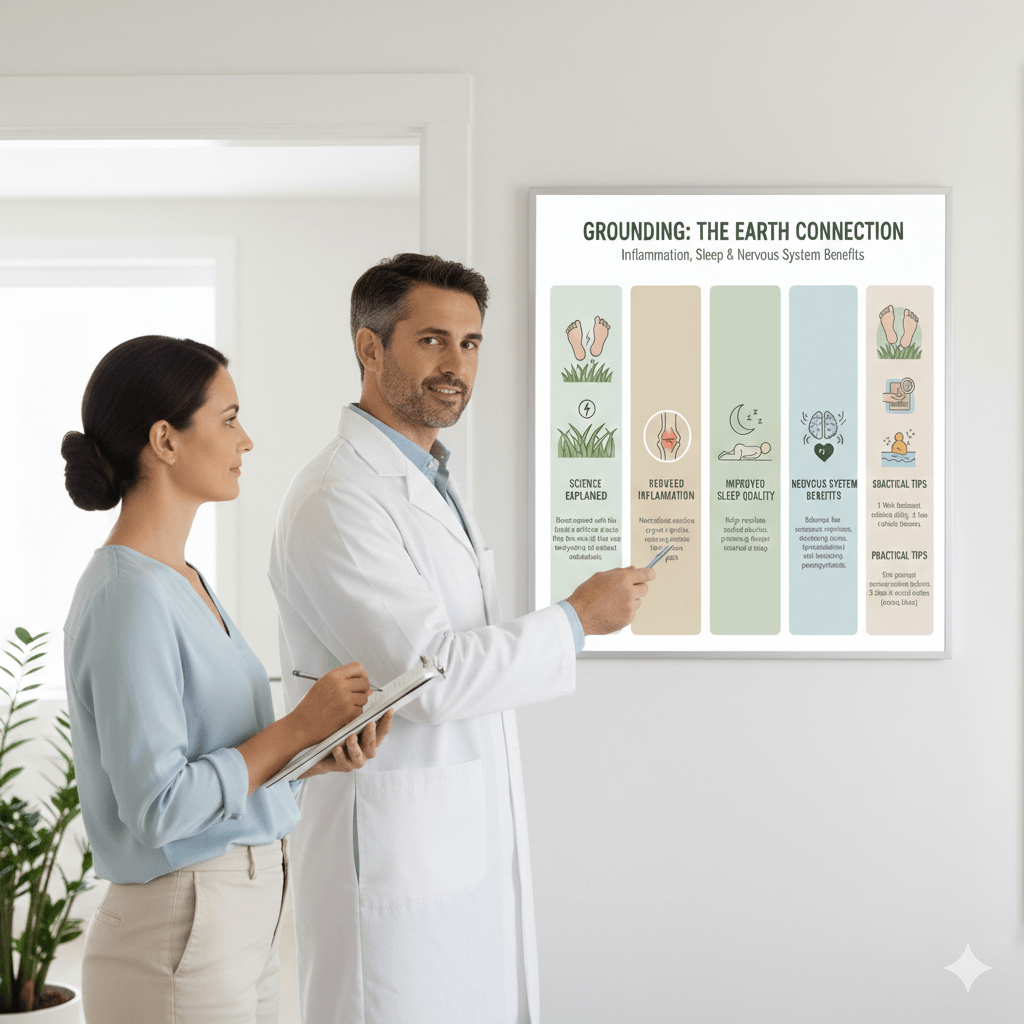
What is grounding?
Grounding, also known as earthing, is the practice of placing your body in direct contact with the surface of the earth. This can mean walking barefoot on soil, grass, sand, or even concrete. The idea is rooted in the understanding that the earth maintains a subtle negative electrical charge, and when your skin touches the ground, your body absorbs free electrons.
While the concept may sound unconventional, a growing body of peer-reviewed research has explored how this electron transfer may influence inflammation, sleep, pain perception, and autonomic nervous system function.
How grounding affects inflammation
Chronic low-grade inflammation is linked to a wide range of health conditions, from cardiovascular disease to autoimmune disorders. One of the most studied mechanisms of grounding is its potential to reduce this systemic inflammation.
When free electrons from the earth enter the body, they may neutralize positively charged free radicals that drive inflammatory responses. A study published in the Journal of Inflammation Research found that grounded participants showed measurable reductions in white blood cell counts and pro-inflammatory cytokines compared to ungrounded controls.
A simple starting point
Spend 20 minutes barefoot on natural ground each morning. Dewy grass in the early hours provides excellent conductivity and pairs well with a mindfulness or breathing routine.
Grounding and sleep quality
Sleep disruption is one of the most common health complaints in modern life. Grounding may offer a surprisingly simple intervention. Research conducted by Ghaly and Teplitz showed that participants who slept on grounding pads experienced normalized cortisol rhythms, with cortisol peaking appropriately in the morning and declining through the evening.
Participants also reported falling asleep faster, waking less frequently, and feeling more refreshed in the morning. These improvements were attributed to the calming effect of earth electrons on the autonomic nervous system, shifting the body from a sympathetic (fight-or-flight) to a parasympathetic (rest-and-digest) state.
Effects on the nervous system
The autonomic nervous system governs processes like heart rate, digestion, and stress response. Grounding appears to shift the balance toward parasympathetic dominance. In practical terms, this means reduced heart rate variability markers associated with stress, improved vagal tone, and a general sense of calm.
A controlled study measuring heart rate variability found that just 40 minutes of grounding produced statistically significant improvements in parasympathetic markers. Participants consistently described the experience as deeply relaxing, even without any conscious relaxation techniques.
Practical ways to ground yourself
- Walk barefoot outdoors: Grass, soil, sand, and unpainted concrete are all conductive surfaces. Even 15 to 20 minutes daily can be beneficial.
- Garden without gloves: Working with soil directly engages your hands with the earth, combining grounding with the therapeutic benefits of gardening.
- Swim in natural water: Lakes, rivers, and the ocean are excellent conductors. Swimming or wading barefoot provides full-body contact.
- Use grounding mats: For those who cannot access outdoor surfaces regularly, grounding mats connected to the earth port of an electrical outlet can provide indoor grounding during sleep or desk work.
- Sit on the ground: Simply sitting on grass or soil while reading, stretching, or meditating provides continuous electron transfer.
Who should be cautious
Grounding is generally considered safe for most people. However, individuals taking blood-thinning medications should consult their healthcare provider, as some researchers have noted that grounding may influence blood viscosity. People with open wounds on their feet should also exercise care when walking barefoot outdoors.
"The earth beneath our feet is not just something we walk on. It is a living electrical system that our bodies evolved to stay connected with."
- Dr. Stephen Sinatra
Building grounding into your routine
The beauty of grounding is its simplicity. You do not need equipment, memberships, or special training. Start by incorporating barefoot time into your morning routine, even if it is just stepping onto your lawn while drinking your morning water. Over time, you may notice improvements in sleep, mood, and overall sense of calm.
Combine grounding with other natural wellness practices like deep breathing, sunlight exposure, and gentle movement for a compounding effect. The goal is not to add another task to your day but to reconnect with a practice that humans maintained for thousands of years before modern footwear and indoor living created a barrier between us and the earth.